Enterprise Knowledge
Agent
 Realtime Intelligence
 Customer Support 360
 Analytica
 CreditIQ
 City Intelligence
 Smart Utilities
 Connected Worker & Assets
 Drone Based Infra Monitoring
 SceneTrack


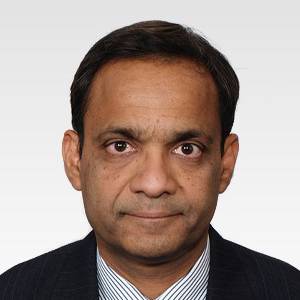
Dr. Alok Aggarwal
 Accounts Reconciliation
 Financial Spreading
 Digital Archive
 SchematicIQ
 Loan Ops
 Docutwin
 Contract intelligence
 KYC/KYB
 Form Processing
 Investment Statements


Ready to Bring AI Automation to Your Business?
Let's DiscussWhile the United States and China dominate much of the global discussion surrounding artificial intelligence, India is undergoing a significant technological transformation that receives comparatively less international attention. Beyond the announcements about increasingly powerful AI models and enormous infrastructure investments, Indian healthcare providers are steadily integrating AI into clinical operations, diagnostics, patient monitoring, and hospital administration.
What makes this development particularly interesting is the speed of adoption. India’s healthcare system faces persistent challenges involving patient volumes, limited medical resources, and unequal access to specialized care. Consequently, hospitals and healthcare professionals have strong practical incentives to adopt technologies that improve productivity and make existing resources more effective.
According to Elsevier’s Clinician of the Future 2025 report, the proportion of Indian clinicians using AI for professional purposes increased from approximately 12% in 2024 to 41% in 2025. This represents more than a threefold increase within a single year.
The corresponding adoption rates were approximately 36% in the United States and 34% in the United Kingdom. Although China remained considerably ahead at 71%, India’s progress demonstrates how rapidly AI can become integrated into healthcare practices when operational requirements encourage its adoption.
These figures also suggest that India’s healthcare professionals are increasingly comfortable using AI to support clinical decisions, reduce administrative work, and improve patient interactions. However, adoption alone does not establish clinical effectiveness, which must be evaluated through measurable improvements in care quality and patient outcomes.
One of India’s most significant achievements has been the expansion of technology-supported medical consultations.
Between April 2023 and November 2025, the country’s eSanjeevani telemedicine platform supported approximately 282 million consultations. According to government figures, around 12 million of these consultations received assistance from AI-generated diagnostic recommendations.
The significance of this development becomes clearer when considering the difficulty of delivering healthcare across India’s large and geographically dispersed population. Patients in smaller towns and rural communities frequently face limited access to specialists, while major hospitals must accommodate substantial consultation volumes.
AI-assisted clinical decision-support systems can help physicians evaluate symptoms, organize patient information, and identify potential diagnoses. Their value depends on the accuracy of recommendations and the ability of qualified medical professionals to assess them.
As these technologies improve, telemedicine could become an increasingly important mechanism for extending clinical expertise without requiring corresponding increases in physical healthcare infrastructure.
The experience of AIG Hospitals in Hyderabad provides several examples of how AI can address operational problems within healthcare institutions.
An examination of AIG’s pre-surgical procedures revealed that approximately 20% of patients were dropping out during the preparation process. Repeated visits, multiple diagnostic requirements, and administrative complexity contributed to patient fatigue.
The hospital subsequently introduced a centralized pre-surgery assessment process supported by AI. By simplifying coordination and reducing unnecessary movement between departments, AIG reportedly lowered dropout rates to approximately 1%.
This example illustrates the potential value of AI in identifying operational inefficiencies that directly affect patient experience and hospital productivity.
Another application involves identifying patients whose clinical conditions may deteriorate rapidly.
AIG introduced an AI-supported monitoring system called iSAVE to continuously evaluate patient information and alert medical personnel to warning signs before critical deterioration occurs.
The hospital has reported substantial improvements in identifying patients requiring urgent attention. Earlier accounts also described frequent Code Blue emergencies, although the precise reductions attributed to the system require independent clinical verification.
Such applications are especially important because early intervention can help clinicians respond before a patient’s condition becomes life-threatening.
AIG has also implemented MIRA, an AI-powered medical information assistant that responds to common patient questions and supports healthcare professionals with routine information requests.
Automating repetitive interactions can reduce administrative pressure on clinical teams, allowing doctors to devote more consultation time to patients requiring medical judgment and personalized attention.
AI-enabled monitoring systems can also help nurses supervise patients across multiple beds by identifying changes in vital signs and prioritizing cases requiring immediate attention.
This can improve the allocation of nursing resources, particularly in hospitals managing high patient volumes. Nevertheless, such systems require clinical oversight and cannot substitute for necessary bedside care.
India’s healthcare AI transformation is being driven substantially by economic and operational necessity. Expanding access to medical services while controlling expenditure requires hospitals to improve the productivity of doctors, nurses, and supporting personnel.
The government has also committed significant resources to developing the country’s AI ecosystem. In March 2024, it approved the IndiaAI Mission with funding of approximately ₹10,372 crore, equivalent to around $1.25 billion at the time. This investment supports AI development across multiple industries, including healthcare.
In February 2026, India further strengthened its healthcare AI framework through initiatives focused on responsible implementation, evaluation, and clinical reliability.
Dr. D. Nageshwar Reddy, Chairman of AIG Hospitals and a Padma Vibhushan recipient, has emphasized that physicians who effectively incorporate AI into their practices may gain a significant advantage over those who do not.
His observation reflects an important emerging reality: healthcare professionals will increasingly need to understand how AI can improve their clinical and operational effectiveness.
The financial implications of these developments could be substantial. Based on an illustrative projection in which India’s GDP reaches approximately $7 trillion within five years, our analysis suggests that AI-related improvements in healthcare could contribute around $84 billion in economic value.
This estimate assumes meaningful improvements in productivity, healthcare access, service delivery, and associated economic activity. Its realization will depend on the pace of adoption, clinical effectiveness, infrastructure development, and the successful integration of AI into existing healthcare workflows.
India’s experience demonstrates how resource constraints can accelerate technological adoption when institutions recognize clear practical benefits. As AI becomes more deeply integrated into diagnostics, hospital operations, patient monitoring, and telemedicine, its contribution to the healthcare system could extend considerably beyond administrative efficiency.
Ultimately, India’s progress in healthcare AI may offer valuable lessons for other countries seeking to improve medical accessibility, productivity, and patient outcomes while managing increasing pressure on healthcare resources.
Blog Written by
CEO, Chief Data Scientist at Scry AI
Author of the book The Fourth Industrial Revolution
and 100 Years of AI (1950-2050)