Enterprise Knowledge
Agent
 Realtime Intelligence
 Customer Support 360
 Analytica
 CreditIQ
 City Intelligence
 Smart Utilities
 Connected Worker & Assets
 Drone Based Infra Monitoring
 SceneTrack



Dr. Alok Aggarwal
 Accounts Reconciliation
 Financial Spreading
 Digital Archive
 SchematicIQ
 Loan Ops
 Docutwin
 Contract intelligence
 KYC/KYB
 Form Processing
 Investment Statements


Ready to Bring AI Automation to Your Business?
Let's DiscussArtificial intelligence is attracting extraordinary attention from investors, businesses, and governments worldwide. Much of the discussion revolves around its potential to replace human workers, transform industries, and reshape the global economy. However, another market is expanding alongside AI, driven by demographic changes that may prove even more consequential over the coming decades: the longevity market.
In the book The Fourth Industrial Revolution and 100 Years of AI (1950–2050), an estimated 400 million jobs are projected to be displaced by AI by 2050. Yet this prediction raises an interesting possibility. Despite widespread concerns about unemployment, societies may increasingly depend on AI to perform additional work because there may simply be insufficient workers to meet growing economic and social needs.
The demographic trends behind this possibility are worth examining. According to the United Nations’ 2019 population projections, the global population was approximately 7.7 billion in 2019 and was expected to reach 9.7 billion by 2050. Over the same period, estimates cited for the global workforce suggest an increase from approximately 3.2 billion to 3.9 billion.
Although the overall population is expected to increase, its age distribution will change considerably. The United Nations projected that populations in 55 countries or areas would decline by at least 1% between 2019 and 2050. Meanwhile, the number of people aged 80 years or older was projected to increase from 143 million to 426 million, while the population aged 65 and above was expected to rise from approximately 727 million to 1.5 billion.
These projections indicate that a growing proportion of the population will be entering retirement while a relatively smaller working-age population supports economic activity. This imbalance could affect productivity, taxation, pension systems, healthcare spending, and the availability of essential services. Countries with declining working-age populations may face particularly difficult choices about sustaining economic growth while meeting the needs of older citizens.
Increasing life expectancy will create substantial economic opportunities, along with significant challenges for healthcare systems. Many individuals aged 65 and older will retain considerable purchasing power, particularly in developed economies. However, advancing age can also increase demand for medical services, assisted living, rehabilitation, and support with everyday activities.
As a result, the demand for healthcare professionals and caregivers is expected to rise sharply. Some projections suggest that the worldwide shortage of healthcare and caregiving personnel could reach 100 million by 2050, although the precise estimate depends on the occupations and countries included.
Early signs of this shift are already visible in employment statistics. In January 2026, the United States recorded approximately 130,000 additional nonfarm payroll jobs, of which nearly 82,000 were in healthcare. Thus, healthcare accounted for roughly 63% of the net employment increase that month, reflecting the sector’s importance as a source of labor demand.
As populations continue to age, the pressure to deliver more healthcare services with limited human resources may encourage wider adoption of AI, robotics, remote monitoring, and automated assistance.
The longevity market encompasses products and services designed to extend healthy life expectancy, improve quality of life, and address the biological and practical challenges associated with aging. Its activities span medicine, biotechnology, diagnostics, preventive healthcare, specialized clinics, medical devices, supplements, and wellness programs.
An important distinction within this sector is the difference between lifespan and healthspan. Lifespan measures the number of years a person lives, whereas healthspan refers to the years spent in relatively good health, free from serious disease or disability. Increasing healthspan could reduce the economic burden associated with chronic illness while allowing individuals to remain independent and economically active for longer.
The commercial potential extends across several industries. Pharmaceutical companies are developing therapies for age-related diseases, technology companies are introducing monitoring and assistance systems, and healthcare providers are expanding preventive and specialized services. Rising demand from older consumers is likely to encourage further investment in these areas.
The relative sizes of these markets offer an interesting perspective on where future economic opportunities may emerge.
Estimates cited for the global AI market place its value at approximately $390 billion in 2025, with projections reaching $1.4 trillion by 2030.
By comparison, broader estimates of the worldwide longevity economy suggest an increase from approximately $5.3 trillion in 2023 to $8 trillion by 2030.
Although these figures depend on different market definitions and are therefore not directly comparable, they illustrate the enormous economic activity associated with aging populations. The longevity economy includes a much wider range of goods and services, whereas AI market estimates generally focus on AI-related technologies and services.
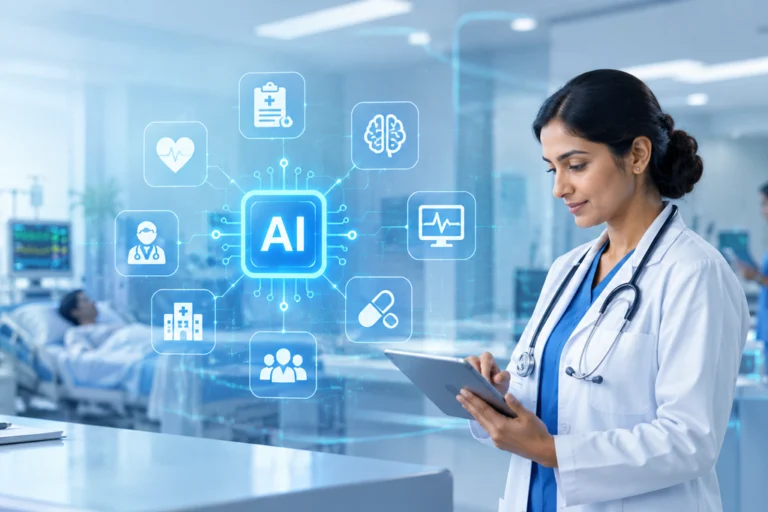
Interestingly, these industries may become increasingly interconnected. AI could support drug discovery, personalized medicine, disease detection, patient monitoring, and automated caregiving, helping address some of the challenges created by population aging.
The growth of the longevity sector reflects a demographic transformation that will influence economies for decades. As the number of older individuals increases and the availability of workers becomes more constrained, societies will need technologies that improve productivity and help deliver essential services.
AI could play an increasingly important role in meeting these requirements, particularly in healthcare and elderly assistance. Its long-term economic value may depend substantially on how effectively it addresses the practical consequences of demographic change.
Indeed, one of the most meaningful measures of AI’s success may ultimately be its contribution to helping societies remain productive, economically sustainable, and capable of caring for aging populations.
In that context, the longevity market could become one of the most important areas in which AI demonstrates its lasting value.
Blog Written by
CEO, Chief Data Scientist at Scry AI
Author of the book The Fourth Industrial Revolution
and 100 Years of AI (1950-2050)