Book a Demo

Drone Based Infrastructure Monitoring That Sees What Manual Inspections Miss

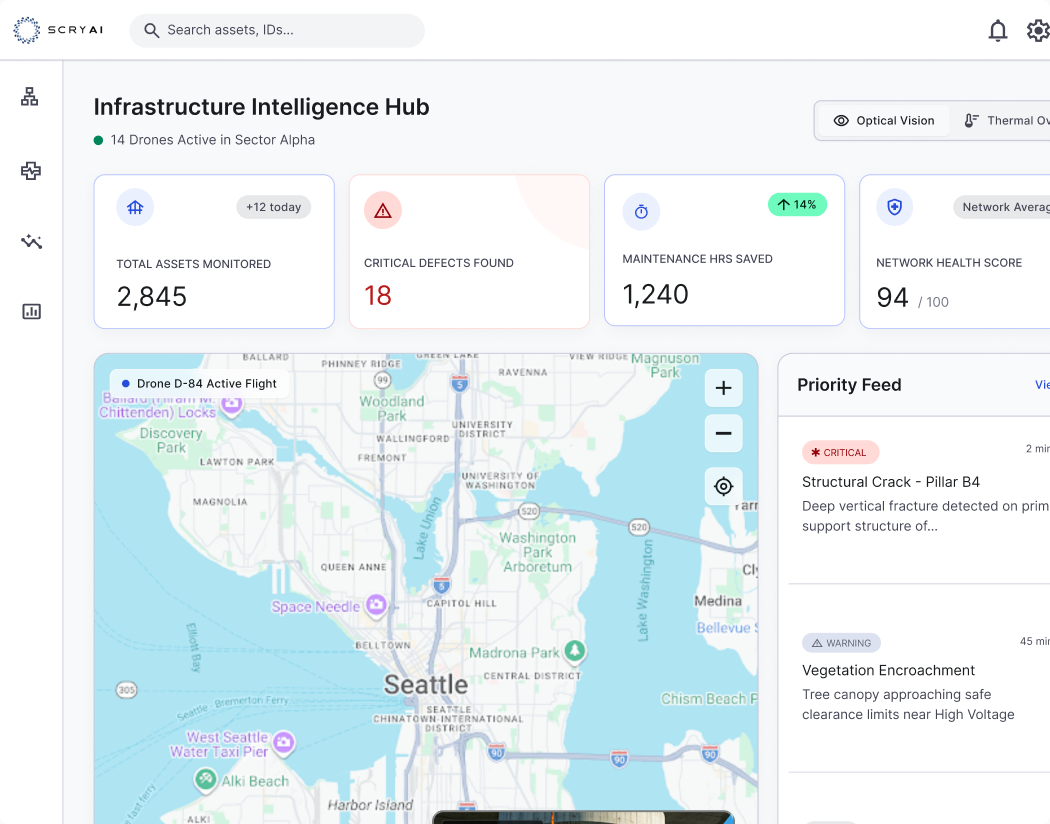
Bridges age silently. Transmission towers corrode in places no inspector can safely reach. Pipelines stretch for miles through terrain that takes days to cover on foot. Traditional inspection methods were built for a simpler era, one where infrastructure was younger, networks were smaller, and time moved slower. Scry AI's drone based infrastructure monitoring solution, built on Concentio®, brings AI-powered visual intelligence to infrastructure networks of any scale, transforming hours of footage into actionable insights that help teams detect defects, prioritize repairs, and extend asset life.

Book a Demo
Investment Analytics Software Built for Real-Time Investment Intelligence

The Inspection Gap in Infrastructure Operations

Infrastructure owners face a fundamental math problem. Assets span thousands of kilometers. Inspection teams number in the dozens. Manual methods require scaffolding, lane closures, rope teams, and weeks of dangerous work to cover what a drone can survey in hours. Yet even when inspections happen, the data often sits in folders, reviewed once and filed away.

The real challenge is not capturing images. Drones and cameras can do that. The challenge is turning visual data into intelligence that maintenance teams can act on. Without AI-powered analysis, inspection footage becomes a storage problem rather than a safety solution. Defects hide in plain sight across thousands of frames. Patterns that signal structural decline go unnoticed. And by the time problems become visible to the human eye, they have often already become expensive to fix.

As infrastructure ages and inspection backlogs grow, the gap between what needs to be monitored and what teams can realistically assess continues to widen.

How Infrastructure Inspection Still Works Today

Most infrastructure operators continue to rely on manual inspection methods that limit coverage, slow response, and leave significant portions of asset networks under-monitored.

1
Manual field inspections
Crews physically inspect bridges, pipelines, transmission lines, and structures on fixed schedules, often requiring scaffolding, lane closures, or rope access.
2
Frame-by-frame video review
Drone and camera footage is reviewed manually, turning hours of captured data into days of analyst effort.
3
Delayed defect identification
Issues surface only after scheduled inspection cycles, sometimes weeks or months after conditions have deteriorated.
4
Coverage limitations
No team can inspect every asset at the frequency that aging infrastructure demands, leaving gaps in monitoring.
5
Disconnected data systems
Inspection footage, defect records, and maintenance systems often operate in silos, limiting visibility and coordination.

Scry AI's Drone Based Infrastructure Monitoring Solution

Built on Concentio®, Scry AI's drone and camera based infrastructure health monitoring solution brings AI-powered visual analytics to large-scale infrastructure networks. It transforms raw inspection footage into structured intelligence that helps teams detect defects earlier, prioritize maintenance smarter, and extend the life of critical assets.

  • Computer vision-based defect detection

    AI-powered analysis of drone and camera imagery to identify cracks, corrosion, vegetation encroachment, and structural anomalies across diverse infrastructure types.

  • Automated visual inspection at scale

    Processes large volumes of inspection footage without requiring frame-by-frame manual review.

  • Multi-asset coverage

    Supports bridges, transmission lines, pipelines, towers, roads, and other linear and vertical infrastructure assets.

  • Thermal and visual anomaly detection

    Identifies hotspots, moisture intrusion, and thermal irregularities that signal underlying structural or electrical issues.

  • Condition scoring and prioritization

    Assigns severity ratings to detected defects, helping teams focus resources on the most critical issues first.

  • Integration with maintenance systems

    Delivers inspection insights into asset management, GIS, and enterprise platforms for coordinated response.

  • Historical trend analysis

    Tracks asset condition over time to identify deterioration patterns and inform lifecycle planning.

Clients

We are trusted by enterprises globally.

Expert 1 Expert 2 Expert 3 Expert 4 Expert 5 Expert 6 Expert 7

Turn Inspection Footage into Infrastructure Intelligence

Stop watching hours of drone footage. Start detecting defects automatically with AI-powered visual analytics built for infrastructure scale.

Book a Demo

Insightful Resources

Discover how SCRY AI solutions bring accuracy and innovation in document processing, conversational AI, and IoT operations.

FAQs

1. What types of infrastructure can be inspected with drone and camera based monitoring?

The solution supports a wide range of infrastructure assets including bridges, transmission lines, pipelines, towers, roads, dams, and other linear and vertical structures. Each asset type benefits from AI-powered defect detection that identifies cracks, corrosion, vegetation encroachment, and structural anomalies from visual and thermal imagery.

Manual review of drone footage requires analysts to examine thousands of frames, which is time-consuming and prone to missed defects. AI-powered analysis automates defect detection, processes large volumes of footage faster, and ensures consistent identification of issues that human reviewers might overlook due to fatigue or volume.

Yes. When thermal imaging is used, the solution can identify hotspots, moisture intrusion, and thermal anomalies that indicate underlying issues invisible in standard visual inspection. This enables earlier detection of problems like electrical faults, insulation failures, or water damage beneath surfaces.

Scry AI's solution integrates with asset management, GIS, and enterprise platforms. Detected defects are tagged with location, severity, and supporting imagery, enabling maintenance teams to generate work orders, prioritize repairs, and track asset condition over time without manual data re-entry.

The solution is designed for utilities, transportation agencies, oil and gas operators, government infrastructure departments, and any organization managing large-scale, distributed infrastructure networks. It supports use cases including bridge inspection, pipeline monitoring, transmission line assessment, and public infrastructure health management.