Book a Demo

Revenue Reconciliation Software to Match Transactional Data Across Multiple Systems Accurately

Automatically compare and reconcile revenue data across ERPs, banks, POS systems, invoices, and contracts at enterprise scale. Identify discrepancies before they compound, ensure financial accuracy and compliance, and close your books with confidence.

Book a Demo
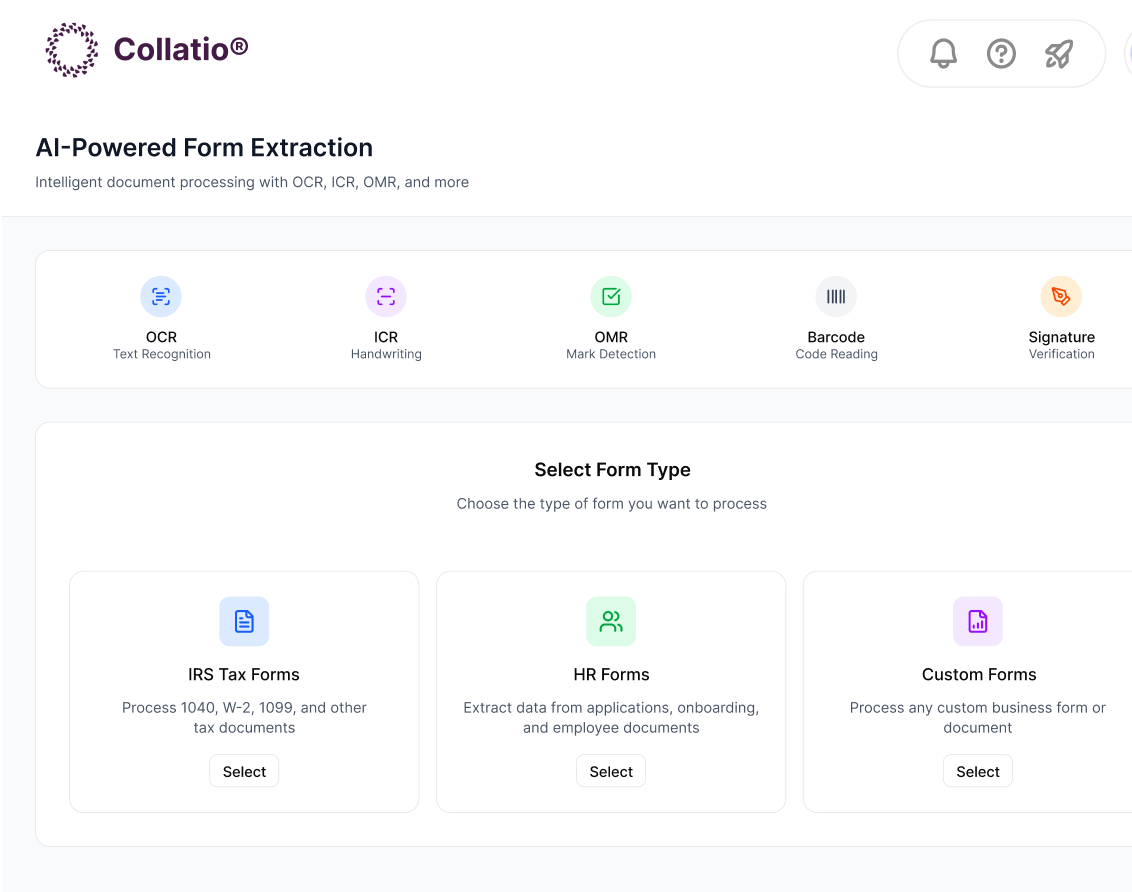
Automated Form Processing Software Powered by AI

Why “Automated” Revenue Reconciliation Still Breaks Every Quarter

Most reconciliation platforms were built for structured ERP exports, single-source data, and rule-based matching that made sense a decade ago. Today, revenue flows through contracts, PDFs, multi-currency POS systems, and real-time payment rails. This creates complex reconciliation challenges across distributed financial systems.

  • Fragmented Revenue Records in Siloed Systems

    Conventional reconciliation software struggles with scattered revenue data across ERPs, CRMs, payment processors, and spreadsheets in different formats.

  • Inconsistent Data, Manual Matching, and Costly Errors

    Partial payments, contract amendments, and multi-currency transactions fall outside predefined rule sets and force human intervention, which increases errors and delays.

  • Revenue Leakage from Undetected Discrepancies

    Discrepancies such as duplicate billing, missed credits, and erroneous payments are often overlooked and gradually erode revenue.

  • Data Breach and Compliance Risks

What is Collatio Revenue Reconciliation?

Collatio Revenue Reconciliation is Scry AI’s enterprise-grade reconciliation platform that automates the end-to-end process of matching and validating revenue and transactional records across systems, workflows, and financial documents. It reconciles revenue data from sources such as invoices, contracts, bank statements, transaction records, and payment files against systems including general ledgers, sub-ledgers, ERPs, CRMs, and accounting platforms. Powered by domain-trained AI models, natural language processing (NLP), and machine learning (ML), Collatio extracts, interprets, and compares financial data to identify mismatched records and missing entries across accounting records and financial systems. It flags discrepancies in real time, routes exceptions through configurable workflows, and automatically validates matched records.

Compare, Match, and Validate Revenue Data at Scale with AI-Driven Intelligence

Collatio revenue reconciliation software is built from the ground up on financial document structures, revenue workflows, and AI-driven reconciliation logic, enabling precise, context-aware capture, validation, and processing of revenue data.

AI-Powered OCR and Intelligent Data Extraction

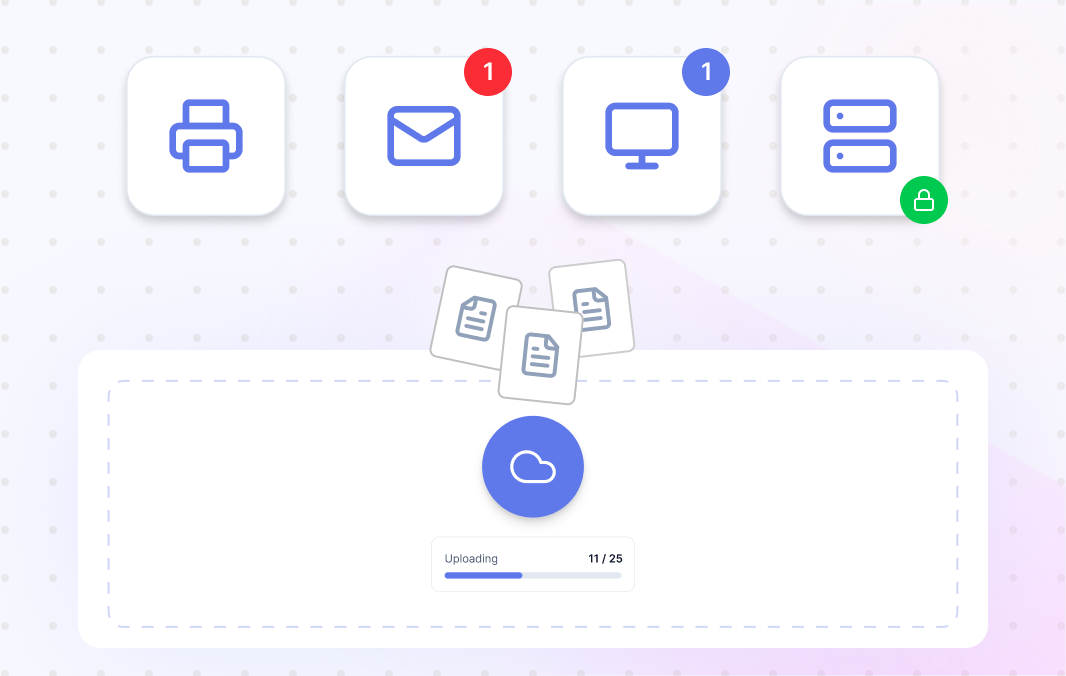
Intelligent Multi-Source Ingestion

Automatically pulls revenue data from ERPs (SAP, Oracle, NetSuite, QuickBooks), CRMs, payment gateways, shared drives, emails, and APIs. Converts formats such as PDFs, CSV files, Excel spreadsheets, and scanned images into a unified, structured dataset ready for accurate and scalable reconciliation.

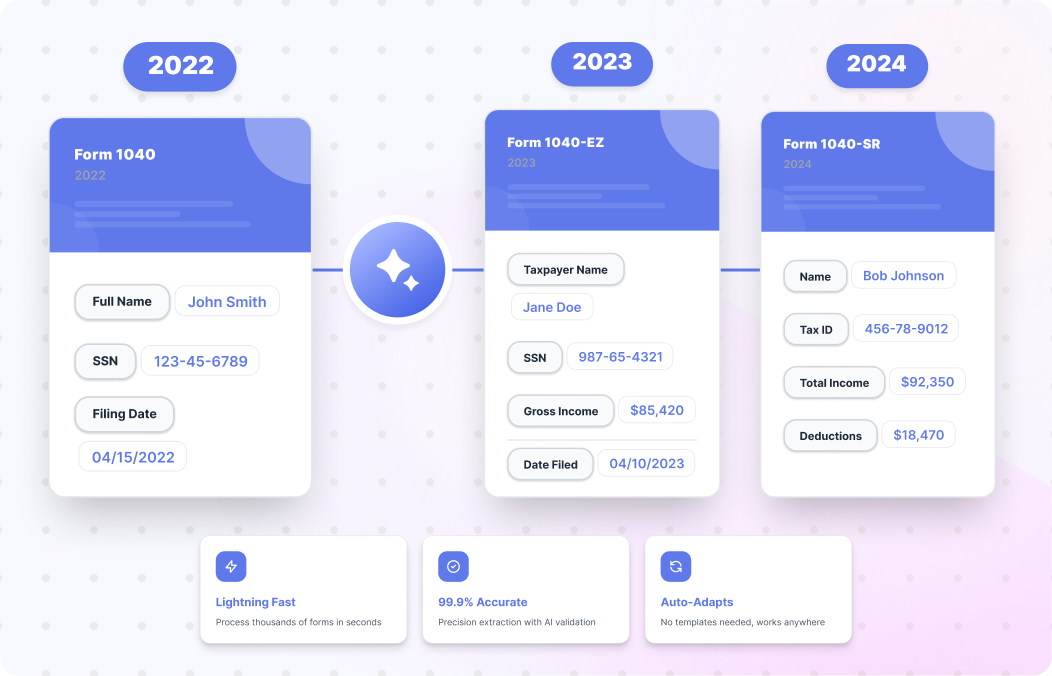
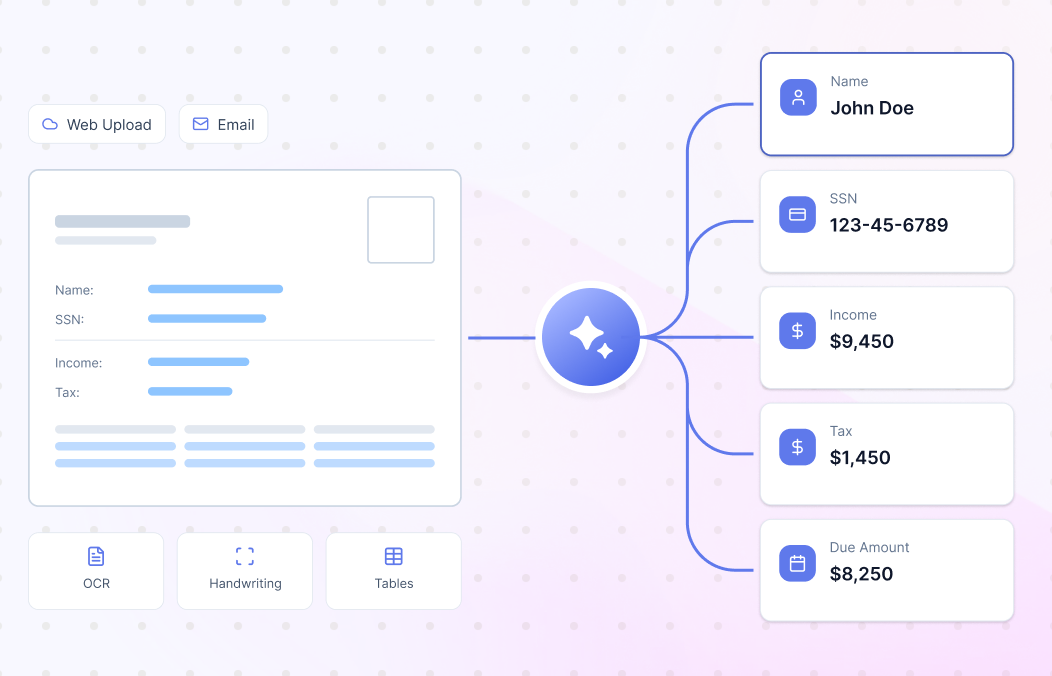
Context-Aware, Template-Free Layout Understanding

AI-Powered Transaction Matching

Collatio reads, extracts, and interprets financial data from invoices, purchase orders, contracts, general ledger entries, and bank transactions to understand the semantic context and relationships between revenue records. It then matches transactions across documents and financial systems to identify and verify corresponding entries with up to 99% accuracy, even in cases such as partial payments, split invoices, and multi-currency transactions.

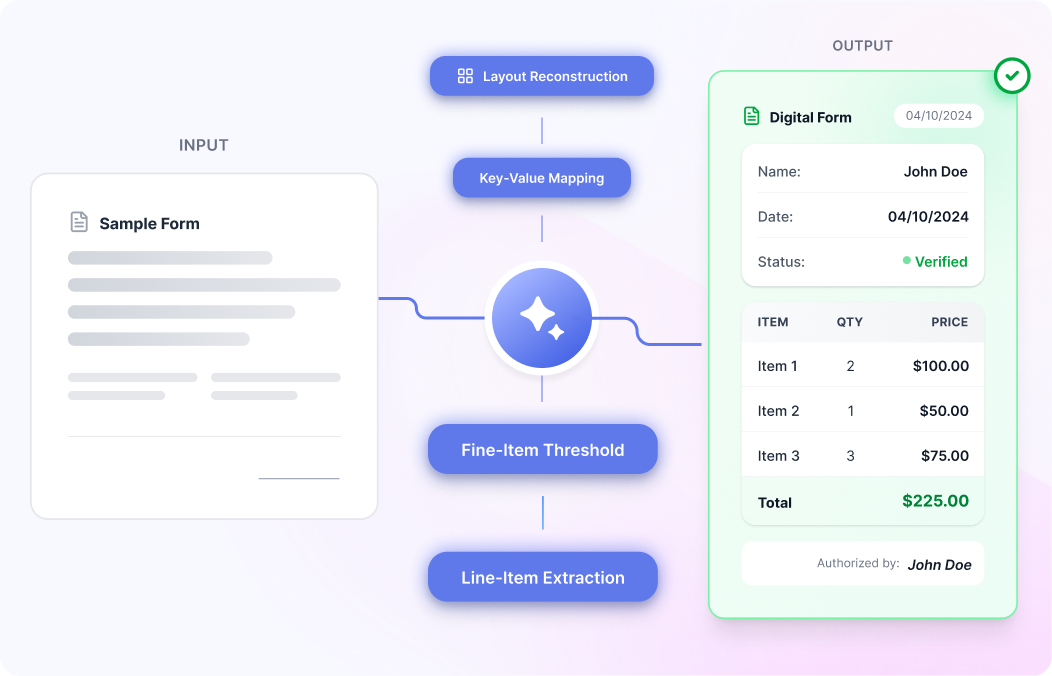
Custom Form Onboarding & Reconstruction

Real-Time Anomaly and Fraud Detection

Continuously monitors revenue transactions across documents and financial systems to detect anomalies and suspicious activity as they occur. Collatio flags discrepancies such as amount mismatches, duplicate records, missing entries, unusual timing patterns, and potential fraud indicators. Each variance is categorized with contextual explanations and automatically routed to the appropriate stakeholder for investigation and resolution.

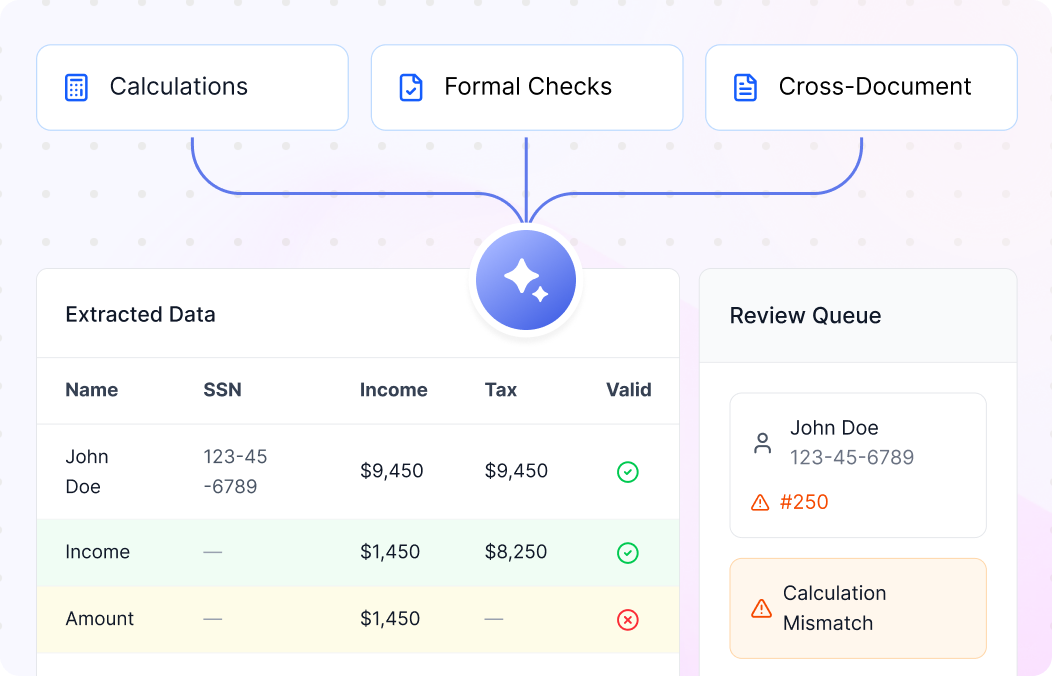
Automated Validation, Verification, and Anomaly Detection

Configurable Exception Workflows for Validation

Pre-built and customizable workflows route reconciliation exceptions based on criteria such as amount, discrepancy type, risk tier, or business unit. Each exception includes clear context, supporting records, and assigned ownership so teams can review and resolve issues efficiently. Matched or high-confidence reconciliations can be automatically validated, while other exceptions follow structured human-in-the-loop review and resolution workflows.

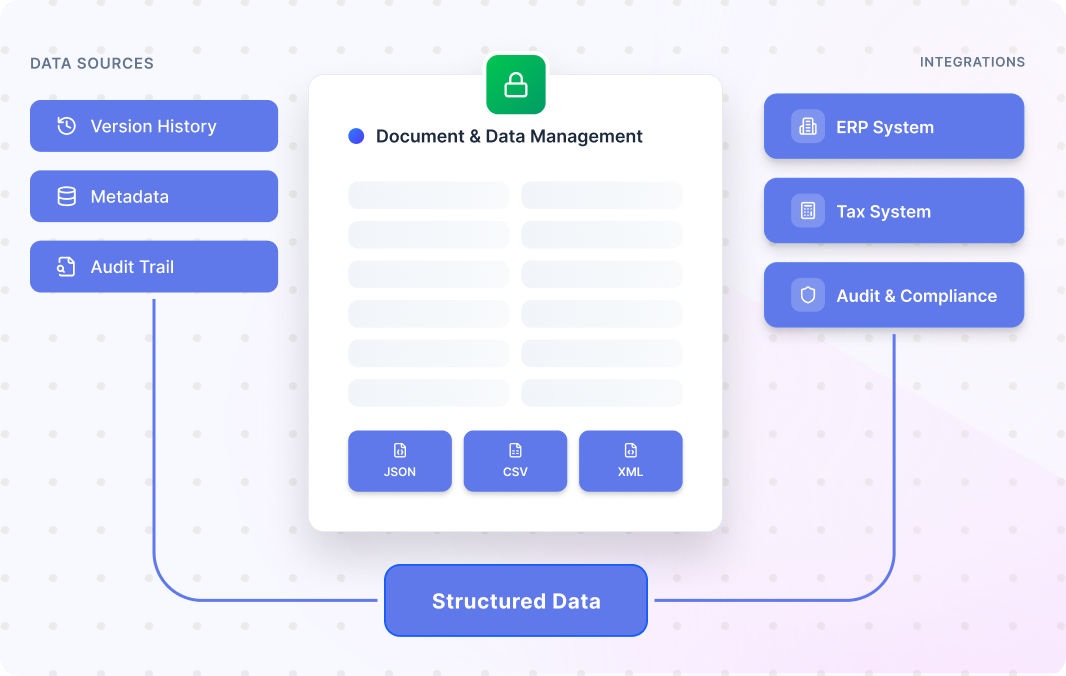
Secure Centralized Management and Enterprise Integration

Live Dashboards and Financial Close Tracking

Collatio provides real-time visibility into reconciliation progress, reconciliation match rates, unresolved exceptions, and overall financial close status through interactive dashboards and reports. Finance teams can monitor bottlenecks, track resolution timelines, and manage reconciliation cycles more effectively.

Secure Centralized Management and Enterprise Integration

Multi-Currency and Multi-Entity Support

Collatio reconciles revenue transactions across multiple subsidiaries, legal entities, and currencies within global finance operations. It supports cross-border transactions by applying appropriate exchange rates and maintaining consistent financial records across entities. This enables finance teams to reconcile international revenue records while preserving compliance and audit-ready reconciliation trails.

Measured Impact Across Revenue Reconciliation Operations

Organizations using Collatio’s automated revenue reconciliation platform achieve measurable improvements in reconciliation accuracy, operational efficiency, and financial control.

0%

Transaction Matching Accuracy Across Invoices, Contracts, and Payment Records

0%

Reduction in Financial Close Cycle Time Through Automated Reconciliation Workflows

0%

Decrease in Manual Reconciliation Effort for Finance and Revenue Operations Teams

0%

Faster Discrepancy Detection and Resolution Through AI-Enabled Reconciliation Monitoring

How Collatio Orchestrates End-to-End Revenue Reconciliation Across Systems and Documents

Capture Revenue Data From Every Source

Collatio captures revenue-related documents and transaction records from enterprise systems, including ERP platforms, billing systems, shared drives, APIs, email inboxes, contracts, invoices, payment files, and bank statements. Both structured and unstructured inputs are consolidated into a unified reconciliation environment, creating a single source of financial data that eliminates fragmented records and prepares the dataset for downstream classification and reconciliation.

Capture Forms From Any Source

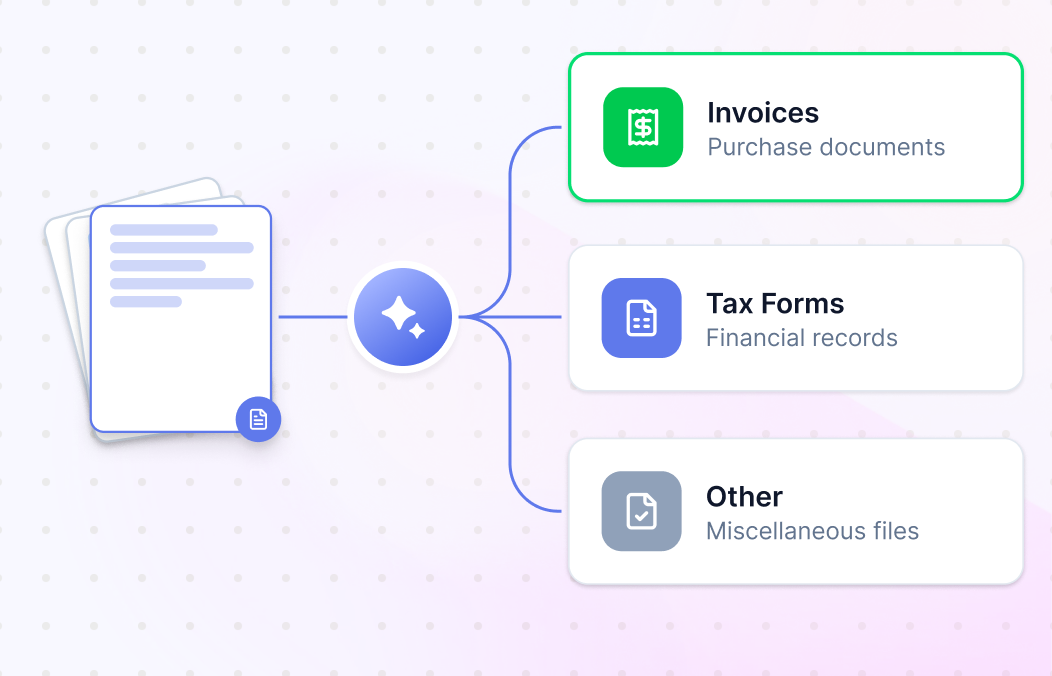
Understand, Extract, and Normalize Revenue Data

AI, machine learning, and natural language processing modules identify document types and interpret their structure and context. Relevant financial fields are then extracted and normalized into consistent formats, ensuring records from different systems and document layouts follow a standardized data model. This process converts high-volume, layout variant source data into clean, structured information that can be accurately matched and reconciled at scale.

Enhance and Organize Documents for Faster Processing

Reconcile Revenue Records Across Financial Systems

Revenue records are automatically matched across contracts, invoices, billing data, payment records, sub ledgers, general ledger entries, settlement files, and bank transactions to validate completeness and accuracy. Discrepancies such as mismatches, missing entries, duplicates, and value variances are identified and flagged instantly. This allows teams to detect revenue-impacting issues early instead of discovering them during financial close or audit reviews.

Extract Data from Complex Forms with Contextual Intelligence

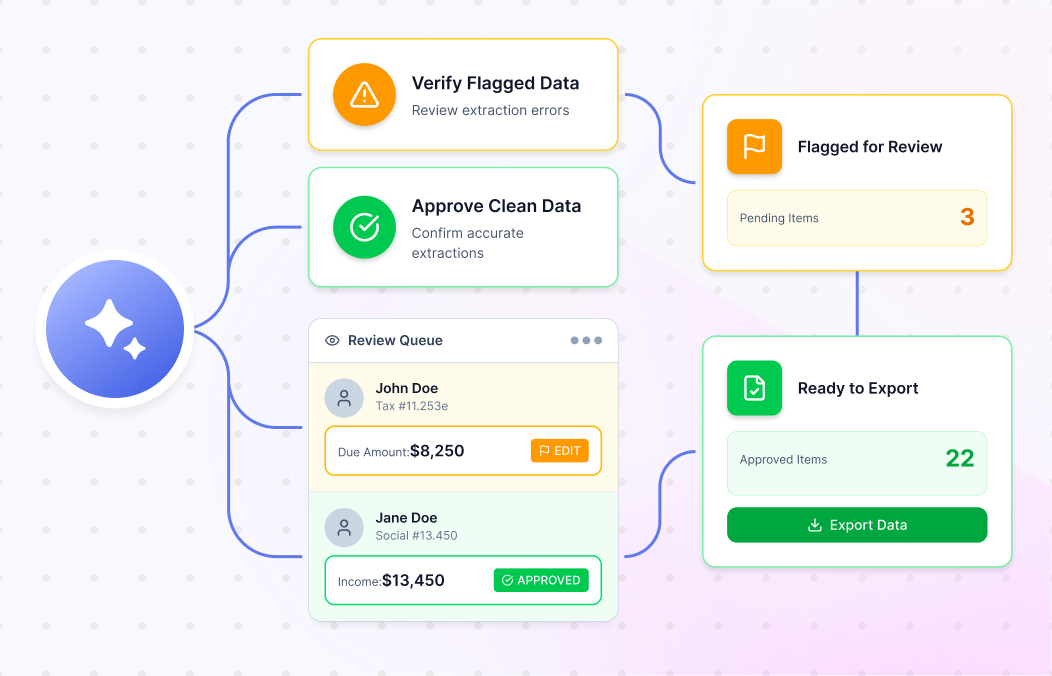
Route Exceptions to the Right Stakeholders for Review and Resolution

Mismatched items and flagged variances are automatically routed to designated stakeholders or teams through configurable workflows based on predefined rules, thresholds, and ownership. Each case is presented with its supporting documents, transaction details, and reconciliation context so reviewers can quickly understand the issue. This human-in-the-loop review process enables finance teams to investigate discrepancies, assign ownership, track resolution status, and approve corrective actions within the same workflow.

Validate Accuracy with Automated, Rules-Based Checks

Certify Reconciliations and Enable Audit-Ready Reporting

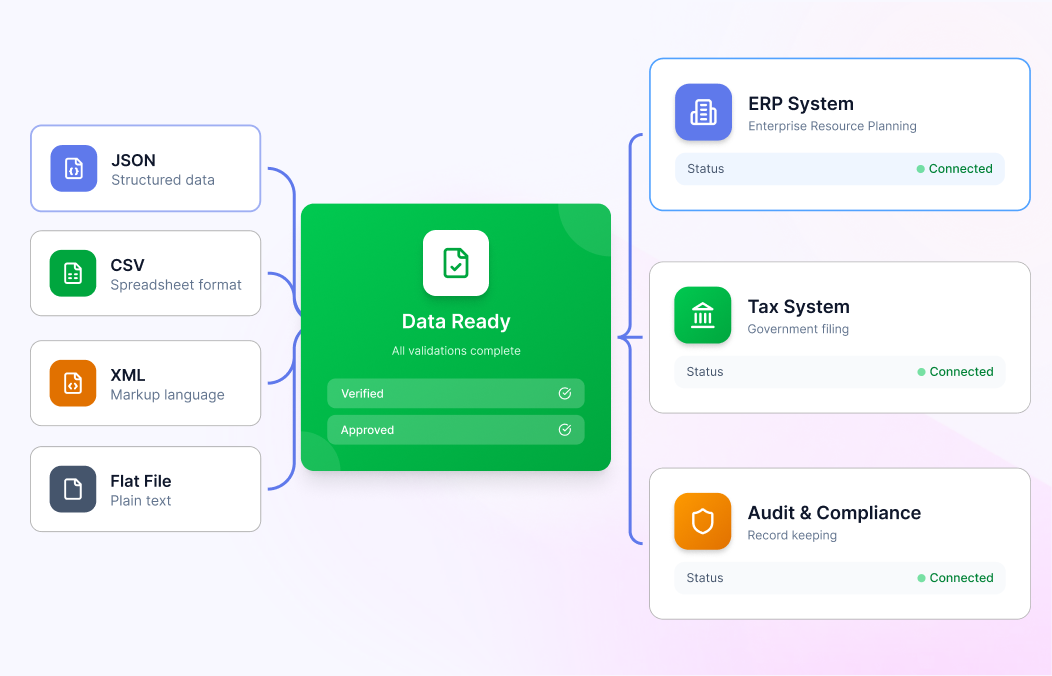
Reconciliation outputs, status details, and variance summaries are organized into structured reports and dashboards with a complete audit trail, providing a consolidated view of reconciliation progress and outcomes. Certified outputs then flow into downstream financial systems and reporting processes, giving teams clear visibility into completed reconciliations, open exceptions, and unresolved items while supporting period-end close, compliance requirements, and audit readiness.

Integrate Clean Data into Downstream Systems with Full Audit Control

What Documents Do We Handle?

Collatio Revenue Reconciliation processes a wide range of financial documents, whether they are in unstructured, semi-structured, or structured formats.

Audit-Ready Compliance & Financial Governance Framework

Collatio embeds security, governance, and compliance controls directly into revenue reconciliation workflows from the outset.

  • SOC 2 and ISO 27001 Certified Infrastructure

    SOC 2 Type II-compliant and ISO 27001-certified infrastructure ensures secure handling of sensitive financial data.

    SOC 2 & ISO 27001-Aligned Controls
  • Complete Audit Trails and Regulatory Reporting

    Every reconciliation action is logged with full traceability, including user activity, approvals, and adjustments, to support audit-ready reporting and regulatory compliance.

    PII & Financial Data Protection
  • Data Encryption and Secure Storage

    Sensitive financial data remains protected through end-to-end encryption and secure storage across documents, systems, and reconciliation workflows.

    Regulatory & Audit Support

Clients

We are trusted by enterprises globally.

Collatio Seamlessly Integrates with Your Stack

Connect with your existing enterprise platforms through APIs and direct data exchange, keeping your workflows intact and your teams in sync.

Close the Books Faster with Collatio’s AI-Driven Revenue Reconciliation

Automatically reconcile transactions across sales channels and accounting systems, detect discrepancies earlier, and resolve exceptions through configurable workflows.

Book a Demo

Recent Articles

  • Prepaid Expenses on Balance Sheet: Accounting Explained

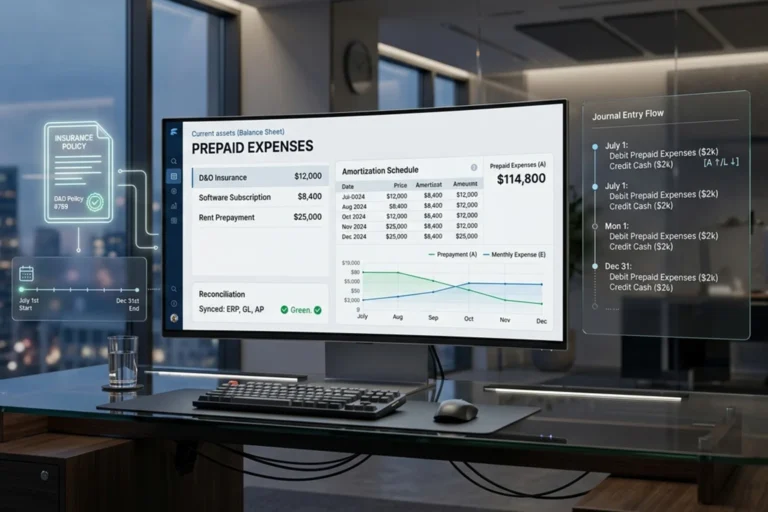
    Prepaid Expenses on the Balance Sheet: How They Are Recorded and Reconciled

    Author Profile Picture
    Arpita Pandey
    Apr 23, 2026
  • Corporate Credit Card Reconciliation Guide

    Corporate Credit Card Reconciliation: Process and Best Practices

    Author Profile Picture
    Arpita Pandey
    Apr 22, 2026
  • Payroll Reconciliation

    What Is Payroll Reconciliation and Why Does It Matter?

    Author Profile Picture
    Arpita Pandey
    Apr 21, 2026
  • Payment Reconciliation

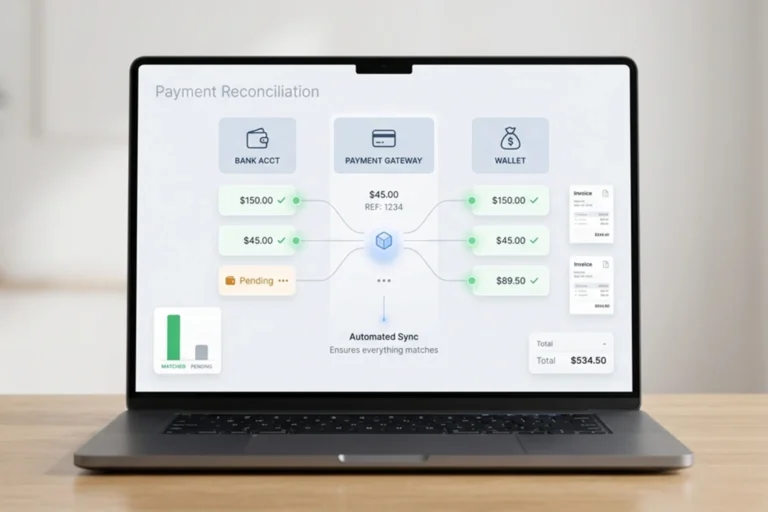
    What Is Payment Reconciliation? Process, Automation, and Key Use Cases

    Author Profile Picture
    Arpita Pandey
    Apr 16, 2026
  • Revenue Reconciliation

    Revenue Reconciliation Explained: Meaning, Process, Examples, and Automation

    Author Profile Picture
    Arpita Pandey
    Apr 16, 2026
  • Treasury Reconciliation

    Understanding Treasury Reconciliation: Process and Practices

    Author Profile Picture
    Arpita Pandey
    Apr 16, 2026
  • Insightful Resources

    Discover how SCRY AI solutions bring accuracy and innovation in document processing, conversational AI, and IoT operations.

    Frequently Asked Questions

    Learn more about the Collatio revenue reconciliation platform and how it helps organizations improve financial accuracy, automate reconciliation workflows, and maintain reliable financial reporting.

    Revenue reconciliation is the process of verifying that revenue recorded in financial systems matches the underlying transaction data from sources such as contracts, invoices, payment reports, and bank statements. By comparing these records across systems, finance teams can identify discrepancies, confirm revenue accuracy, and ensure that all revenue is correctly captured and reported in financial statements.

    Automated revenue reconciliation improves financial accuracy by using AI-driven matching techniques to compare transaction data across systems such as billing platforms, payment gateways, ERP systems, and bank records. Instead of relying on manual spreadsheet checks, platforms like Collatio automatically compare invoices, payment receipts, and settlement reports at scale. This helps finance teams quickly identify discrepancies, focus on resolving exceptions, and ensure revenue is accurately recorded across financial systems.

    The Revenue reconciliation process is challenging because financial data is distributed across multiple systems, such as payment gateways, billing platforms, ERP systems, and bank statements. Finance teams must compare records across these sources to identify mismatches in transactions, settlements, fees, refunds, or timing differences. When performed manually, the process becomes slow and prone to errors, particularly for organizations handling high transaction volumes.

    Revenue accounting automation helps identify issues such as underbilling, missing invoices, incorrect discounts, or unrecorded payments that can lead to revenue leakage. These problems often arise from manual processes, disconnected systems, or data inconsistencies. Platforms like Collatio Revenue Reconciliation provide automated controls, continuous monitoring, and visibility across the revenue lifecycle, helping organizations detect issues earlier and ensure that all earned revenue is accurately captured and reported.

    Deployment time for Automated reconciliation software depends on factors such as system integrations, transaction volume, and reconciliation complexity. Collatio is built for enterprise environments and typically deploys within 3-6 months, connecting with ERP systems, billing platforms, and financial data sources to automate reconciliation workflows and accelerate time to value.