Accounts Reconciliation
 Financial Spreading
 Digital Archive
 SchematicIQ
 Loan Ops
 KYC
KYC Docutwin
 Enterprise Knowledge
Agent
Enterprise Knowledge
Agent Realtime Intelligence
 Customer Support 360
 Analytica
 CreditIQ
 City Intelligence
 Smart Utilities
 Connected Worker & Assets
 Drone Based Infra Monitoring
 SceneTrack



Revenue is one of the most closely monitored financial metrics in any organization. Investors, executives, and auditors all rely on accurate revenue reporting to evaluate business performance. However, revenue does not always flow through systems in a single step. Billing systems generate invoices, payment platforms collect funds, and accounting systems record recognized revenue. These separate processes make revenue reconciliation essential for maintaining financial accuracy.
In simple terms, revenue reconciliation meaning refers to the process of verifying that revenue recorded in financial systems matches supporting records such as contracts, invoices, usage data, and cash receipts. The goal is to ensure that every revenue entry in the accounting system is complete, accurate, and aligned with the organization’s revenue recognition rules.
For modern finance teams, reconciliation also helps validate deferred revenue balances, confirm billing accuracy, and detect discrepancies between recorded revenue and actual payments. As transaction volumes increase, many companies adopt revenue reconciliation automation solutions or account reconciliation software to handle these checks efficiently.
This guide explains what is revenue reconciliation, how the revenue reconciliation process works, common reconciliation scenarios, and how automation improves accuracy and efficiency.
Key Takeaways
- Revenue reconciliation verifies that revenue recorded in accounting systems matches contracts, billing records, and cash receipts.
- Finance teams perform reconciliation to confirm revenue accuracy and ensure compliance with accounting standards.
- Complex billing structures and deferred revenue arrangements make reconciliation essential for modern enterprises.
- Automation and AI-driven reconciliation workflows reduce manual effort and improve accuracy.
- Platforms like Collatio support enterprise finance teams by automating revenue reconciliation processes and improving financial visibility.
What Is Revenue Reconciliation in Accounting?
Revenue reconciliation is the process of validating that revenue recorded in financial statements matches supporting operational data. This includes comparing accounting records with billing systems, customer contracts, order data, and payment records.
The objective is to confirm that the company’s reported revenue reflects actual business activity and complies with accounting policies.
Finance teams perform reconciliation regularly to ensure that revenue entries are accurate and that discrepancies are identified before financial reporting.
Core Definition and Purpose of Revenue Reconciliation
At its core, revenue reconciliation ensures that revenue reported in the general ledger aligns with underlying business transactions.
Finance teams compare revenue entries against several sources of information. These may include customer contracts, billing records, sales orders, usage logs, and payment receipts. The reconciliation process confirms that revenue amounts are correct and recorded in the appropriate accounting period.
The primary purpose of reconciliation is to maintain accurate financial reporting while detecting errors such as duplicate invoices, missing transactions, or incorrect revenue allocations.
Revenue Reconciliation vs Revenue Recognition (and Why Both Matter)
Revenue reconciliation and revenue recognition are closely related but serve different purposes.
Revenue recognition determines when revenue should be recorded in financial statements based on accounting standards. Revenue reconciliation verifies that the revenue already recorded matches the supporting operational records.
For example, a company may recognize revenue gradually for a subscription contract. Reconciliation ensures that the recognized revenue aligns with billing data, customer contracts, and usage activity.
Both processes work together to maintain accurate financial reporting.
Revenue Reconciliation vs Cash-to-Revenue Reconciliation
Revenue reconciliation can involve several comparisons depending on how the organization records sales, invoices customers, and receives payments. One common form is cash to revenue reconciliation, which focuses on verifying whether recorded revenue aligns with the actual cash received from customers.
| Aspect | Revenue Reconciliation | Cash-to-Revenue Reconciliation |
| Purpose | Confirms that revenue recorded in accounting systems matches contracts, billing records, and operational data | Confirms that recorded revenue aligns with cash received from customers |
| Data Sources Compared | Sales contracts, billing systems, revenue schedules, and accounting ledgers | Bank statements, payment processor records, and revenue entries |
| Primary Focus | Accuracy of revenue recognition and financial reporting | Alignment between recognized revenue and cash inflows |
| Typical Use Case | Validating subscription revenue, contract revenue, or usage-based billing | Verifying whether customer payments match recorded revenue amounts |
| Finance Outcome | Ensures revenue is recorded correctly in financial statements | Confirms that payments collected correspond to recognized revenue |
Reconciling Billed Revenue to Recognized Revenue
Many businesses generate invoices before revenue is recognized. For example, subscription companies often bill customers upfront for annual contracts but recognize revenue gradually each month.
During reconciliation, finance teams compare billed amounts with recognized revenue schedules to ensure that revenue is recorded correctly.
This process also supports deferred revenue reconciliation, where prepaid amounts are tracked as liabilities until the service is delivered.
Reconciling Recorded Revenue to Actual Cash Receipts
Another reconciliation step involves confirming that recorded revenue aligns with customer payments.
Finance teams compare accounting records with payment data from banks, payment processors, and financial systems. This verification ensures that revenue recorded in the ledger corresponds to actual cash inflows.
This type of reconciliation is especially important for organizations that operate multiple payment channels.
Step-by-Step Revenue Reconciliation Process
Although systems vary across organizations, most finance teams follow a structured workflow when performing revenue reconciliation.
Step 1: Collect and Organize Sales, Billing, and Cash Data
The process begins by gathering data from multiple operational systems. Finance teams collect sales data from CRM platforms, billing records from invoicing systems, and payment information from bank statements or payment processors.
Having a complete dataset ensures that revenue entries can be verified accurately.
Match Billing Records to Contracts, Orders, and Usage
Once the data is collected, finance teams compare billing records with the underlying business agreements.
Invoices must match the terms defined in customer contracts or service agreements. For usage-based services, billing amounts must correspond with actual usage records.
This step confirms that billed revenue reflects legitimate transactions.
Step 2: Align Revenue Schedules with Recognition Rules
Revenue recognition schedules determine when revenue should appear in financial statements.
Finance teams verify that revenue recorded in accounting systems follows the appropriate recognition schedule based on accounting policies.
For example, subscription revenue may be recognized monthly even if the customer paid for the entire year upfront.
Step 3: Reconcile Subledgers and GL Revenue Accounts
The next step involves comparing revenue data from operational systems with the revenue accounts in the general ledger.
Subledger records must align with the totals recorded in the main accounting system. This comparison confirms that financial reports accurately reflect operational revenue activity.
Step 4: Identify and Investigate Discrepancies and Timing Differences
During reconciliation, finance teams may discover discrepancies between different data sources.
These differences may occur due to timing issues, missing transactions, incorrect billing amounts, or system errors.
Each discrepancy must be investigated to determine the cause and ensure that the accounting records remain accurate.
Step 5: Make Adjustments, Deferrals, and Reclassifications
Once discrepancies are identified, finance teams adjust the accounting records accordingly.
Adjustments may include correcting billing errors, recording deferred revenue entries, or reclassifying transactions to the correct revenue account.
These corrections ensure that the revenue data used in financial reporting is accurate.
Step 6: Document the Reconciliation and Obtain Approvals
After adjustments are made, finance teams document the reconciliation process.
Documentation includes reconciliation reports, investigation notes, and approval records from finance managers. Maintaining detailed documentation helps ensure audit readiness and supports financial governance.
Many organizations rely on account reconciliation software to track these activities and maintain centralized reconciliation records.
Revenue Reconciliation Examples and Scenarios
Practical scenarios make revenue reconciliation easier to understand because they show how data flows across billing, accounting, and payment systems. In real business environments, finance teams are not just matching numbers, they are validating whether revenue is recorded correctly based on contracts, timing, and actual cash movement.
Example 1: Cash-to-Revenue Reconciliation for a Subscription Business
Consider a SaaS company that charges customers ₹12,000 for an annual subscription. The full payment is received upfront, but revenue is recognized monthly at ₹1,000.
In this case, finance teams must ensure three things align:
- The cash received (₹12,000)
- The deferred revenue balance (remaining obligation)
- The monthly recognized revenue (₹1,000 per month)
During reconciliation, they compare the payment received with the revenue recognition schedule. If, for example, ₹6,000 has been recognized after six months, the remaining ₹6,000 should still sit as deferred revenue.
If these numbers do not align, it indicates an issue in revenue recognition or contract mapping. This is a classic revenue reconciliation example for subscription models where cash and revenue timing differ.
Example 2: Deferred Revenue Reconciliation for Multi-Period Contracts
Now consider a company that signs a three-year service contract worth ₹3,60,000 and receives the full payment upfront.
At the time of payment, the entire amount is recorded as deferred revenue because the service will be delivered over three years. Each month, ₹10,000 is recognized as revenue.
Finance teams must reconcile:
- Total contract value
- Revenue already recognized
- Remaining deferred revenue balance
If after one year ₹1,20,000 has been recognized, the deferred revenue balance should be ₹2,40,000. Reconciliation ensures that this remaining balance accurately reflects the services yet to be delivered.
Any mismatch here could indicate incorrect amortization, missed entries, or contract misalignment.
Example 3: Reconciling Revenue to Cash Across Multiple Payment Methods
In businesses that operate across multiple payment channels, reconciliation becomes more complex.
For example, a company may receive payments through:
- Credit cards
- UPI or digital wallets
- Bank transfers
- Payment gateways
Each channel may settle funds at different times and may deduct processing fees before transferring cash.
Finance teams must reconcile:
- Revenue recorded in the accounting system
- Payment data from each channel
- Actual cash received in bank accounts
For instance, if ₹1,00,000 in revenue is recorded but only ₹97,000 is received in the bank, the difference may be due to payment gateway fees or settlement timing.
Reconciliation ensures that all payment differences are explained and properly recorded, and that total revenue aligns with actual collections across all channels.
Common Revenue Reconciliation Challenges
Even with structured workflows in place, revenue reconciliation is rarely straightforward. As businesses grow, transaction volumes increase, pricing models become more complex, and data spreads across multiple systems. These factors introduce practical challenges that finance teams must manage carefully to maintain accurate revenue reporting.
Complex Revenue Recognition and Multi-Element Arrangements
Many modern contracts do not involve a single product or service. Instead, they include multiple components such as software access, implementation services, support, and add-ons delivered over different time periods.
Each component may have a different revenue recognition rule. Finance teams must allocate the total contract value across these components and recognize revenue accordingly. This makes reconciliation more complex because the recorded revenue must match both the contract terms and the recognition schedule. Any mismatch between allocation and recognition can create discrepancies.
Timing Differences Between Invoicing, Recognition, and Cash Collection
Revenue does not always move in a straight line from invoice to payment to recognition. These steps often occur at different times.
For example, a company may invoice a customer upfront, recognize revenue monthly, and receive payment later. These timing gaps create temporary differences between billing records, revenue entries, and cash receipts. Finance teams must track these differences carefully to ensure they are expected timing issues and not actual errors.
Inadequate Documentation and Fragmented Data Sources
Revenue-related data is often spread across multiple systems such as CRM platforms, billing tools, accounting software, and payment processors. Each system may store part of the transaction lifecycle.
When these systems are not connected, finance teams must manually gather and compare data from different sources. This increases the risk of missing information, inconsistent records, or incorrect assumptions during reconciliation.
Failing to Reconcile All Relevant Revenue and Cash Accounts
In some cases, organizations focus only on main revenue accounts and overlook related accounts such as deferred revenue, refunds, adjustments, or payment clearing accounts.
If these supporting accounts are not included in the reconciliation process, discrepancies may remain hidden. Complete reconciliation requires reviewing all accounts that affect revenue and customer payments to ensure full financial accuracy.
Insufficient Training and Limited Use of Automation
Revenue reconciliation often involves complex rules, detailed data analysis, and careful review of multiple systems. Without proper training, finance teams may struggle to handle these requirements efficiently.
Manual processes also become difficult to manage as transaction volumes increase. Without automation support, teams may spend excessive time on repetitive tasks, increasing the risk of delays and errors in financial reporting.
Best Practices for Accurate Revenue Reconciliation
Finance teams can improve reconciliation accuracy by adopting structured practices and modern financial systems.
Centralize Revenue Data Across Billing, CRM, and GL Systems
Centralizing revenue data makes reconciliation easier because finance teams can access all relevant information from one location.
Integrating billing platforms with accounting systems also reduces manual data entry.
Standardize Policies, Cutoffs, and Reconciliation Checklists
Organizations should establish standardized procedures for reconciliation activities.
Defined policies ensure that reconciliation occurs consistently across reporting periods.
Conduct Regular Reconciliations by Product, Channel, and Region
Segmenting revenue reconciliation by product lines, sales channels, or geographic regions helps finance teams identify discrepancies more quickly.
Regular reconciliation schedules also reduce the risk of unresolved issues accumulating over time.
Track Key Metrics and Performance Indicators for Reconciliation Health
Finance teams should monitor metrics such as reconciliation completion time, discrepancy frequency, and unresolved differences.
Tracking these metrics helps identify operational inefficiencies and improve reconciliation performance.
Automating Revenue Reconciliation With Modern Tools
As transaction volumes grow and revenue streams become more complex, manual reconciliation methods start to slow down finance operations. Automation helps finance teams handle large datasets, reduce repetitive work, and maintain accuracy across systems. It shifts reconciliation from a reactive, time-heavy task to a more controlled and efficient process.
Implement Automation for Matching, Exception Handling, and Workflows
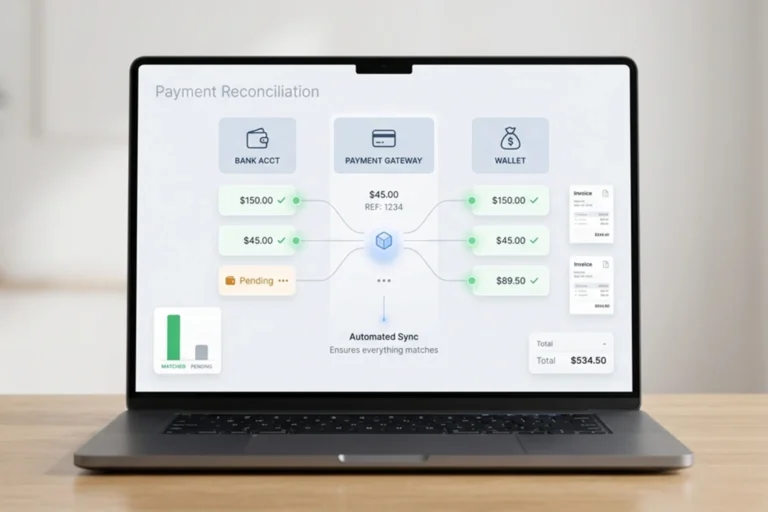
Automated systems can match transactions across billing platforms, accounting systems, and payment records without manual intervention. Instead of comparing entries one by one, the system identifies matches based on rules such as amount, date, and reference ID.
When mismatches occur, the system flags them as exceptions and routes them for review. This allows finance teams to focus only on discrepancies rather than reviewing every transaction. It reduces workload and shortens reconciliation cycles significantly.
Use AI and Machine Learning to Detect Patterns and Anomalies
Advanced automation platforms use AI to analyze large volumes of financial data and identify unusual patterns. These systems learn from historical transactions and can detect anomalies that may not be obvious through manual checks.
For example, they can flag duplicate billing, unexpected revenue spikes, or missing transactions. This helps finance teams identify errors earlier and investigate potential issues such as incorrect billing logic or unusual customer behavior.
Integrate Billing Platforms, Payment Processors, and the GL
One of the biggest challenges in reconciliation is data scattered across multiple systems. Automation becomes far more effective when these systems are connected.
By integrating billing platforms, payment processors, and the general ledger, data flows automatically between systems. This reduces manual data collection and ensures that all records are aligned. As a result, finance teams work with consistent and up-to-date information during reconciliation.
Measure and Continuously Improve Automated Reconciliation Performance
Automation is not a one-time setup. Finance teams must regularly evaluate how well reconciliation processes are performing.
This includes monitoring how many transactions are matched automatically, how many exceptions occur, and how quickly discrepancies are resolved. Based on these insights, teams can refine matching rules, improve data quality, and adjust workflows.
Continuous improvement ensures that automated reconciliation remains accurate, efficient, and aligned with the organization’s financial operations as they grow.
Why Collatio is The Ideal Revenue Reconciliation Automation Solution
Enterprise finance teams face increasing pressure to maintain accurate revenue reporting while managing growing transaction volumes. Manual reconciliation processes often struggle to keep pace with modern financial operations.
Collatio, developed by Scry AI, provides an intelligent platform designed to automate reconciliation workflows across enterprise finance environments.
The platform helps finance teams match revenue transactions across systems, detect discrepancies quickly, and maintain clear documentation of reconciliation activities. By automating complex reconciliation tasks, Collatio reduces manual effort while improving financial visibility.
For CFOs and finance leaders responsible for accurate revenue reporting, Collatio provides a scalable solution that supports reliable financial governance and reconciliation efficiency.
Book a Demo to see how Collatio supports automated revenue reconciliation and enterprise financial control.